

5 Days in Krakow: History and Memory
5 Days in Krakow: History and Memory
Day 1: Medieval Krakow and Historical Foundations
Explore Krakow’s medieval core while tracing the foundations of the city’s political, religious, and intellectual history through defensive architecture, sacred spaces, and layers of urban memory.
Morning
Begin with a walk from the Kraków Barbican, a well-preserved medieval defensive outpost, toward St. Florian’s Gate, the historic entrance into Kraków Old Town.
Continue along Floriańska Street into the vast Main Market Square (Rynek Główny), the historic heart of the city. Observe the square’s Gothic churches, Renaissance facades, aristocratic townhouses, and monuments that reflect centuries of political and commercial life.
Visit St. Mary’s Basilica, known for its Gothic architecture, richly decorated interior, and the hourly bugle call known as the hejnał, played from the taller tower every hour. Requirements for respectful/modest attire apply at churches, synagogues, and other religious sites. Visitors should avoid disrupting religious observances and remain mindful of posted customs.
Afternoon
Optional add-on: Visit Collegium Maius, where exhibits explore the history of the Jagiellonian University and its connections to scholars such as Nicolaus Copernicus.
Continue beneath the square to the Rynek Underground Museum, where archaeological remains, excavated streets, artifacts, and multimedia exhibits reveal everyday life in medieval Krakow and the city’s development through centuries of trade, religion, and urban expansion.
End the afternoon at the Basilica of St. Francis of Assisi, Kraków, known for its colorful stained glass windows and Art Nouveau decoration by Stanisław Wyspiański, one of Poland’s most influential artists and playwrights.
Evening
Spend the evening walking through Planty Park, the green belt surrounding the Old Town that replaced Krakow’s former medieval defensive walls. Along the route, note the statues, memorials, and monuments dedicated to important Polish writers, artists, and historical figures. Throughout the park there are QR codes that allow visitors to listen to excerpts of Polish literature and poetry while walking through shaded pathways.
Day 2: Royal Heritage and Sacred Spaces
Discover Krakow’s royal and religious history before exploring Kazimierz, whose streets preserve centuries of Jewish heritage, cultural memory, and artistic life.
Morning
Spend the morning at Wawel Royal Castle, the historic royal residence overlooking the Vistula River and one of Poland’s most important national landmarks. Explore the Renaissance courtyards, royal chambers, treasury collections, and exhibitions connected to centuries of monarchy, diplomacy, and statehood.
Afternoon
Continue to Wawel Cathedral, traditionally used for royal coronations, funerals, and burials. The cathedral contains elaborate chapels, crypts, royal tombs, and the famous Sigismund Bell. Requirements for respectful/modest attire apply at churches and religious sites. Visitors should remain mindful of posted customs and avoid disrupting services or observances.
Optional add-on: Visit the Seweryn Udziela Ethnographic Museum, which is dedicated to Polish folk traditions and everyday life across different regions of Poland.
Continue to Corpus Christi Basilica, a monumental Gothic church whose layered architecture and historic significance reflect Krakow’s religious and civic development across centuries.
Evening
Spend the evening exploring the Kazimierz District, Krakow’s historic Jewish Quarter, known for its synagogues, courtyards, cafés, artistic atmosphere, and layered cultural history. Stop by Plac Nowy, the neighborhood’s central square and enjoy dinner in the neighborhood.
Optional add-on: Attend a live klezmer or jazz performance, both closely associated with Kazimierz’s evening cultural scene.
Day 3: Auschwitz-Birkenau Memorial and Wartime Memories
Dedicate the day to one of Europe’s most significant memorial sites while reflecting on the human consequences of war, occupation, and genocide.
Day
Take a day trip to Auschwitz-Birkenau Memorial and Museum, the preserved site of the former Nazi German concentration and extermination camp complex established during World War II.
Visits typically include Auschwitz I, where exhibitions, a partially reconstructed gas chamber, and a crematorium document the Holocaust and Nazi occupation, followed by Auschwitz II-Birkenau, whose preserved railway tracks, barracks, watchtowers, and ruins of gas chambers illustrate the immense scale of the genocide.
The experience can be emotionally difficult and usually occupies most of the day. Visitors should behave respectfully throughout the memorial grounds and remain mindful that the site functions both as a museum and as a place of remembrance. Use discretion when choosing which exhibits to visit, as some displays may be intense.
Optional add-on: Visit the Site of the Gerrman Nazi Concentration Camp Płaszów, located on the grounds of the former Nazi labor and concentration camp established in Krakow during the occupation. The largely undeveloped memorial landscape preserves traces of the camp while commemorating its victims.
Evening
After returning to Krakow, spend the evening strolling along the Vistula River toward Wawel Royal Castle, where illuminated riverside pathways and castle walls create a quieter and more reflective atmosphere following the day’s memorial visit.
Day 4: Jewish Krakow and the Memory of Occupation
Explore the history of Jewish life in Krakow before tracing the wartime experiences of the city’s Jewish community through museums, memorials, and preserved remnants of the former ghetto.
Morning
Begin at the Old Synagogue, the oldest surviving synagogue building in Poland and now a museum exploring the religious and cultural history of Krakow’s Jewish community. Requirements for respectful/modest attire apply at churches, synagogues, and other religious sites. Visitors should avoid disrupting religious observances and remain mindful of posted customs.
Continue to the cemetery of Remuh Synagogue, one of the oldest Jewish cemeteries in Poland. It is an important site of remembrance where surviving and reconstructed gravestones reflect both continuity and destruction within Krakow’s Jewish history. If time permits, explore the interior of the Remuh Synagogue, one of the few active synagogues remaining in Krakow.
Optional add-on: Continue to the Galicia Jewish Museum, where exhibitions focus on Jewish memory, identity, Holocaust remembrance, and the legacy of Jewish communities in Galicia and southern Poland.
Afternoon
Walk across the modern Father Bernatek Footbridge into the district of Podgórze, which served as the site of the Nazi-established Krakow Ghetto during World War II.
Visit Oskar Schindler’s Enamel Factory, now a museum presenting Krakow under Nazi occupation through immersive exhibits, reconstructed spaces, photographs, and personal testimonies. Use discretion when choosing which exhibits to visit, as some displays may be intense.
Continue to the Ghetto Heroes Square, where empty bronze chairs commemorate Jews deported from the Krakow Ghetto during World War II and their abandoned belongings.
Optional add-on: Visit the nearby Eagle Pharmacy Museum, a small museum honoring pharmacist Tadeusz Pankiewicz, who risked his life to aid Jewish residents during the Nazi occupation.
Head to the preserved Ghetto Wall Fragment, whose tombstone-shaped design symbolically recalls the tragedy of the ghetto period.
Evening
End the day at Krakus Mound with panoramic views over the city.
Day 5: Communist Nowa Huta and Postwar Times
Explore Nowa Huta, the socialist district built after World War II as a model communist city intended to reshape both Krakow’s industrial economy and social identity.
Morning
Begin your visit to Nowa Huta at Central Square (Plac Centralny), whose broad avenues, monumental architecture, and carefully planned urban layout illustrate the ideals of postwar socialist realism. Continue through residential districts and civic spaces designed to promote collective life within the communist system.
Visit the Muzeum Nowej Huty to learn about everyday life during the communist era, political propaganda, civil defense, and the transformation of the district over time.
Optional add-on: Stop for lunch at a traditional milk bar (bar mleczny), where inexpensive cafeteria-style meals preserve a culinary tradition closely associated with communist-era Poland.
Continue to Our Lady Queen of Poland Church, also known as the Lord’s Ark Church, whose modernist architecture became a symbol of resistance to communist authority and the persistence of religious identity within officially atheist Poland.
Evening
Conclude the trip with a river cruise along the Vistula, offering views of Krakow’s riverbanks, bridges, churches, and castle skyline while reflecting on the many historical layers found in the city.
Options for Bad Weather
In case of bad weather, consider visiting the Polish Aviation Museum for historic aircraft, Cold War aviation exhibits, and the history of military and civilian aviation in Poland.
Optional Trip Extension
To extend your time in Krakow, add a visit to the Wieliczka Salt Mine, where vast underground chambers, chapels, sculptures, and centuries-old tunnels offer insight into the labor, industry, and economic foundations that helped shape the historical development of Krakow and southern Poland.
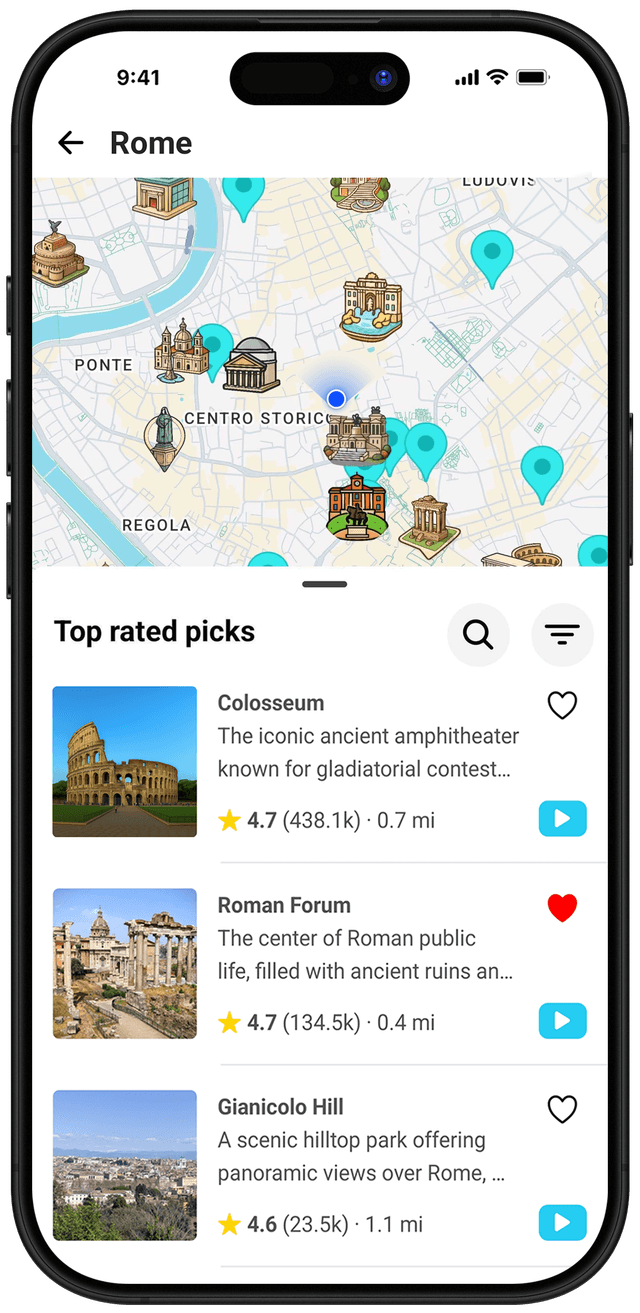
Make the most of your trip with the Travi App
Audio Guides
Professional narrated stories that you can listen to on your own schedule.
Snap & Learn
Point your camera at any monument to instantly identify it and hear its history.
Itineraries
Browse curated day-by-day plans, customize them to fit your style, or build your own from scratch and share with friends.